
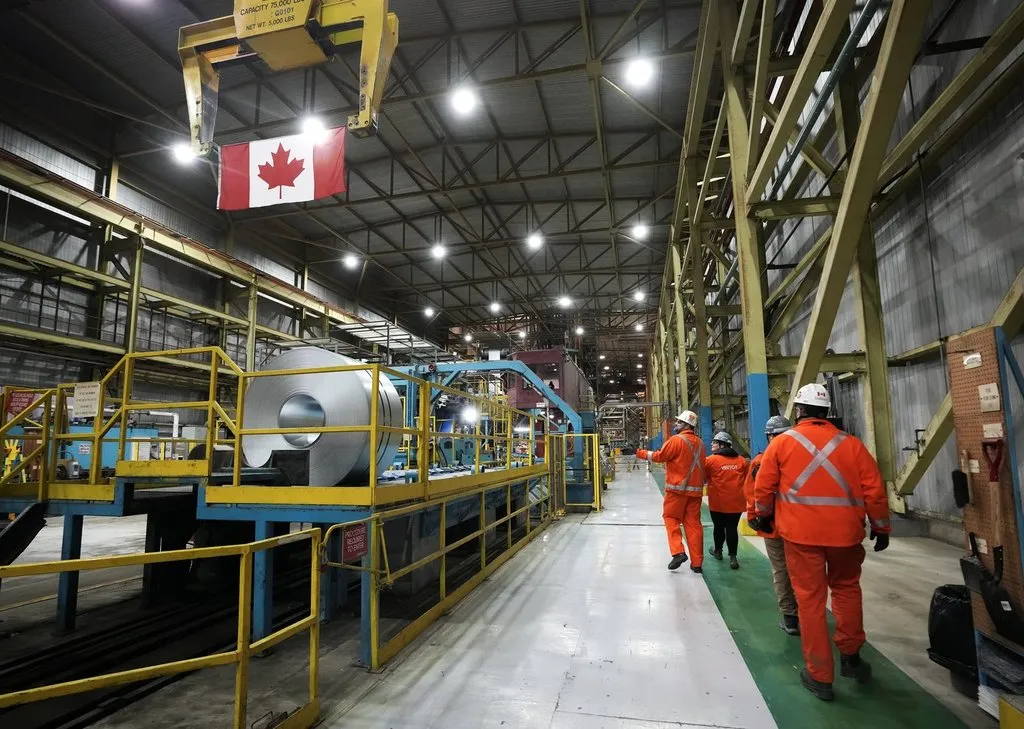
Canada’s Economy Slips 0.4% in Q3 as Higher Debt Costs Slow Spending
Canada’s economy contracted 1.1% in the third quarter of 2025, signalling a sharper-than-expected slowdown as higher interest rates, soft consumer spending, and weak exports weighed on national growth. According to newly released government data, the decline marks one of the steepest quarterly drops since the pandemic years.
Economists had anticipated a mild contraction, but the deeper slide suggests that economic pressures may be broadening across multiple sectors. The report indicates that both households and businesses are pulling back due to high borrowing costs and uncertainty about future financial conditions.
Key Takeaways From the Q3 Report
- GDP fell 1.1% between July and September, the second quarterly decline of 2025.
- Household spending slowed notably, especially on discretionary goods.
- Exports weakened, reflecting softer global demand and lower commodity shipments.
- Business investment also dipped amid cautious financial conditions.
- Economists say the data supports the possibility of future interest-rate adjustments if the slowdown continues.
What’s Driving the Economic Decline?
Canada’s economic contraction was largely driven by softer domestic activity. Consumer spending, a major engine of growth, cooled as households faced persistent financial pressures. Rising living costs and higher credit rates discouraged many from making non-essential purchases, while mortgage renewals added strain for homeowners.
Meanwhile, exports slipped, with reduced demand for Canadian goods in overseas markets. Energy shipments, typically a strong pillar of the economy, saw lower output as global markets adjusted to fluctuating prices and supply dynamics.
The business sector also showed signs of caution, with investment in buildings, equipment, and technology weakening. Many firms appear to be delaying expansion or hiring plans due to slowing demand and elevated operating costs.
Expert Perspective
“The economy is clearly losing momentum, and the weakness is now more widespread,” one senior economist noted, adding that the latest data may prompt policymakers to reassess interest-rate strategy if conditions worsen.
What This Means for Canadians
The contraction signals a challenging economic environment heading into 2026. For everyday Canadians, this could translate into:
- Slower job creation in key sectors
- More cautious consumer-lending activity from banks
- Continued pressure on household budgets
- Increased scrutiny on future interest-rate decisions by policymakers
Still, some analysts believe that a cooling economy may eventually reduce inflationary pressures, potentially paving the way for rate cuts in mid-2026 if trends continue.
Looking Ahead
Economists expect the final quarter of the year to remain soft, though a modest rebound is still possible if global demand stabilises. Canada’s central bank will closely watch upcoming labour-market data and inflation numbers before determining its next policy steps.
While the latest report highlights challenges, experts stress that Canada’s economic fundamentals — including strong population growth, resilient resource sectors, and steady long-term investment — may help support recovery once financial conditions begin to ease.